
Geoframing is Esquire Advertising’s proprietary location-based targeting technology. It captures consumers’ device information while they are out and about in the real world. By mapping a specific location — a competitor’s store, an event, a trade show, or any address that matters to your business — geoframing can identify virtually any device (smartphones, tablets, laptops) that enters that area. After those consumers leave the location, we continue to reach them with your digital ads across every screen they use. The result is a highly qualified, intent-driven audience built from real-world behavior rather than guesswork.
GEOFRAMING
Geoframing is Esquire Advertising’s proprietary location-based targeting technology. It captures consumers’ device information while they are out and about in the real world. By mapping a specific location — a competitor’s store, an event, a trade show, or any address that matters to your business — geoframing can identify virtually any device (smartphones, tablets, laptops) that enters that area. After those consumers leave the location, we continue to reach them with your digital ads across every screen they use. The result is a highly qualified, intent-driven audience built from real-world behavior rather than guesswork.
COMPARE
GEOFRAMING VS. GEOFENCING
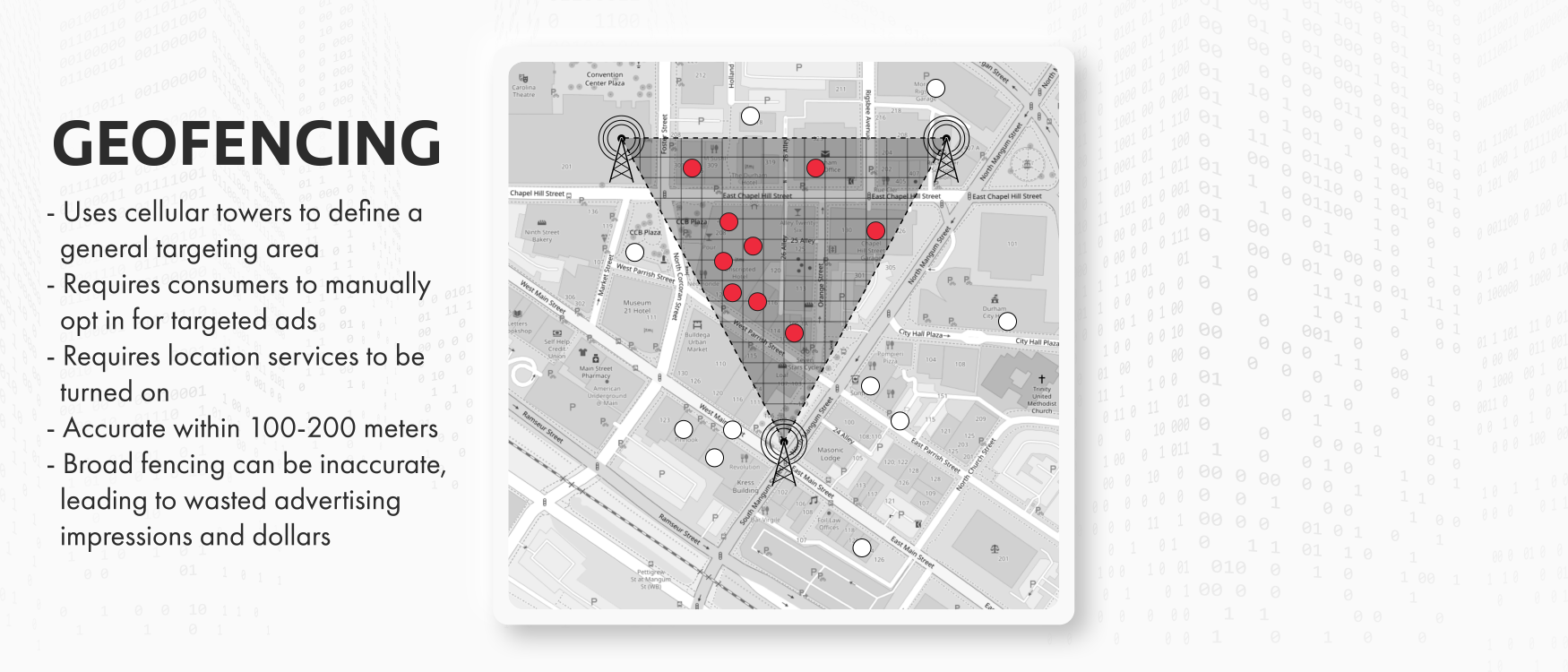
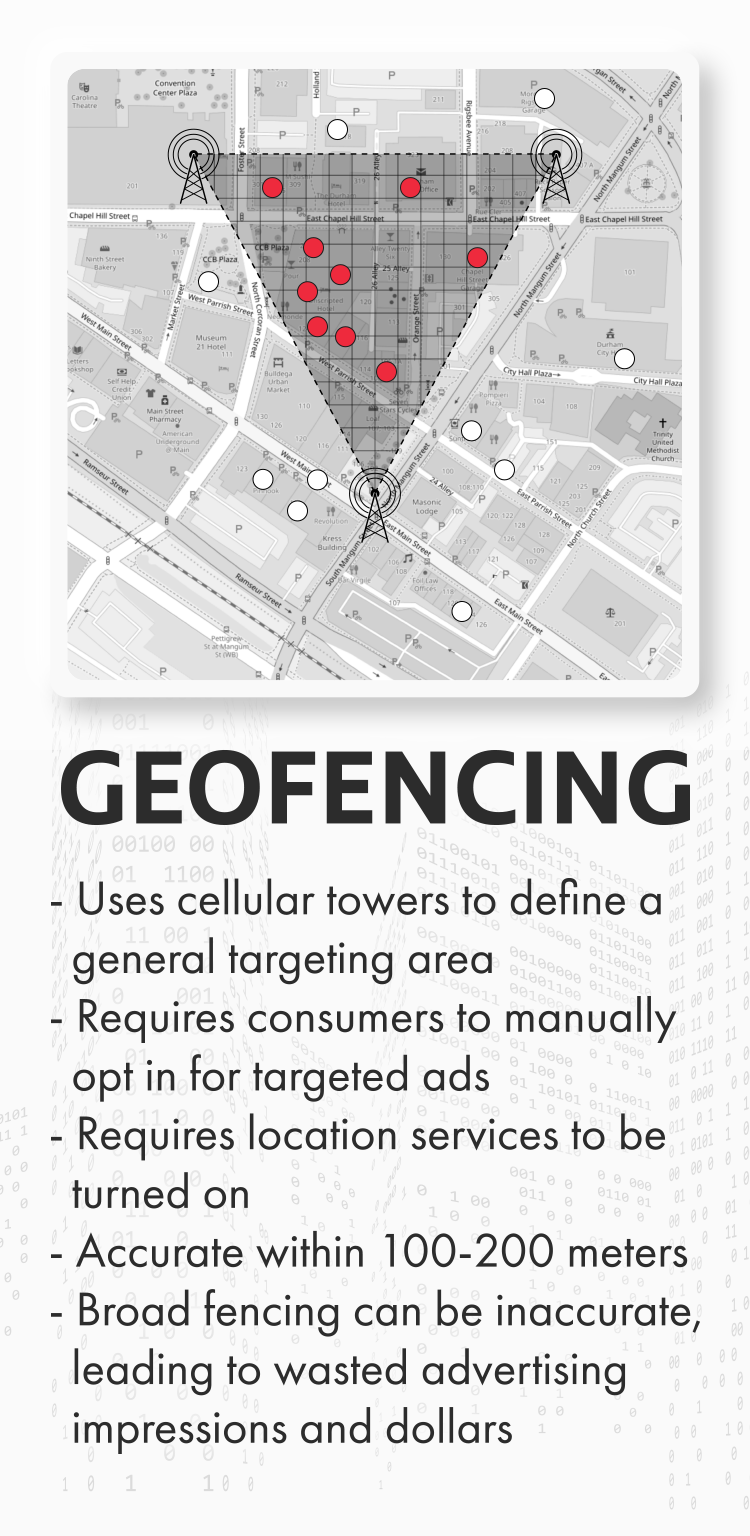
So what’s the difference between geoframing and geofencing? Geofencing draws a virtual boundary around a location and serves ads only while a device is physically inside that boundary — the moment someone leaves, the targeting stops. Geoframing goes further. Instead of a live fence, we capture the device IDs of everyone who visited a mapped location and keep reaching them long after they’ve left, across every device they own. The result is less wasted spend, far more precise audiences, and campaigns built on confirmed real-world visits rather than broad guesses — the same location intelligence, made permanent and portable.


CONTACT
GET STARTED
If you are interested in learning more and would like to take the next steps, please feel free to reach out to us and a representative will be in touch with you shortly.